
$100 Note

Security Thread
Hold the note to light to see an embedded thread running vertically to the left of the portrait. The thread is imprinted with the letters USA and the numeral 100 in an alternating pattern and is visible from both sides of the note. The thread glows pink when illuminated by ultraviolet light.

3-D Security Ribbon
Tilt the note back and forth while focusing on the blue ribbon. You will see the bells change to 100s as they move. When you tilt the note back and forth, the bells and 100s move side to side. If you tilt it side to side, they move up and down. The ribbon is woven into the paper, not printed on it.

Bell in the Inkwell
Tilt the note to see the color-shifting bell in the copper inkwell change from copper to green, an effect which makes the bell seem to appear and disappear within the inkwell.

Watermark
Hold the note to light and look for a faint image of Benjamin Franklin in the blank space to the right of the portrait. The image is visible from both sides of the note.

Color-Shifting Ink
Tilt the note to see the numeral 100 in the lower right corner of the front of the note shift from copper to green.
-
Federal Reserve System Seal
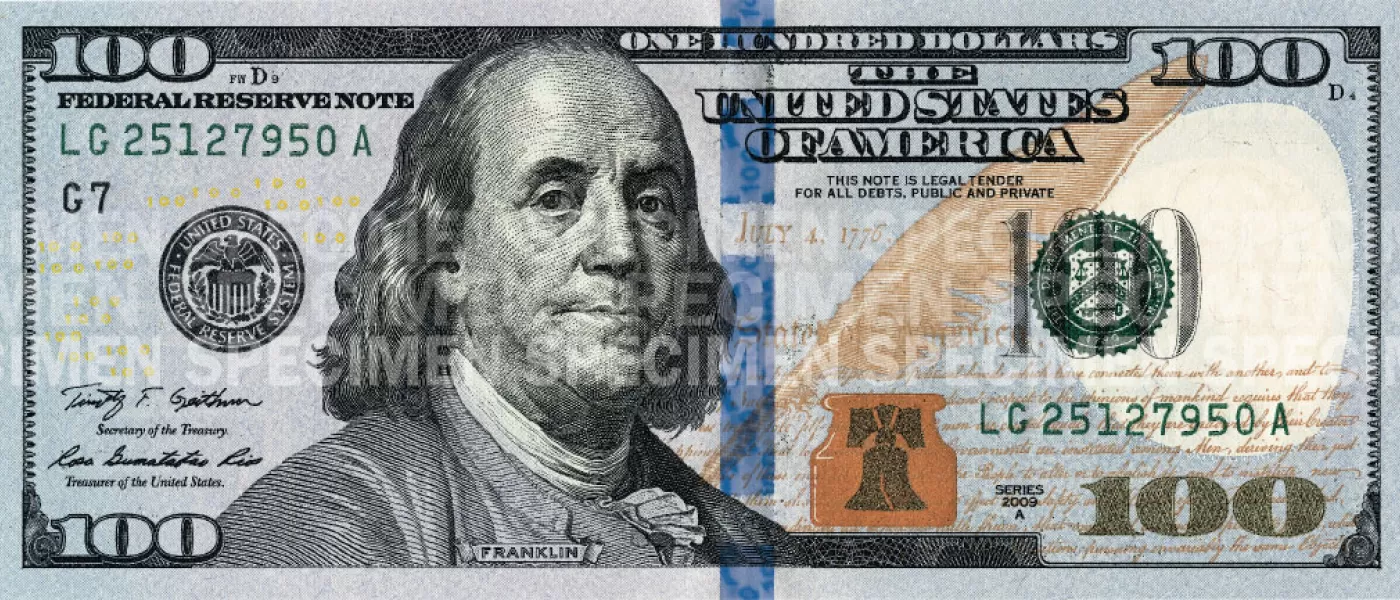
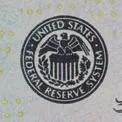
A black seal to the left of the portrait represents the entire Federal Reserve System. A letter and number beneath the left serial number identifies the distributing Federal Reserve Bank.
-
Microprinting
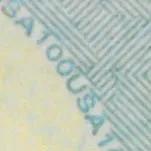
Look carefully (magnification may be necessary) to see the small printed text THE UNITED STATES OF AMERICA on Benjamin Franklin’s jacket collar, USA 100 around the blank space containing the portrait watermark, ONE HUNDRED USA along the golden quill, and small 100s in the note borders.
-
Raised Printing
Move your finger up and down Benjamin Franklin’s shoulder on the left side of the note. It should feel rough to the touch, a result of the enhanced intaglio printing process used to create the image. Traditional raised printing can be felt throughout the $100 note, and gives genuine Federal Reserve notes their distinctive texture.
-
Paper
Federal Reserve note paper is one-fourth linen and three-fourths cotton, and contains red and blue security fibers.
-
Portrait and Vignette
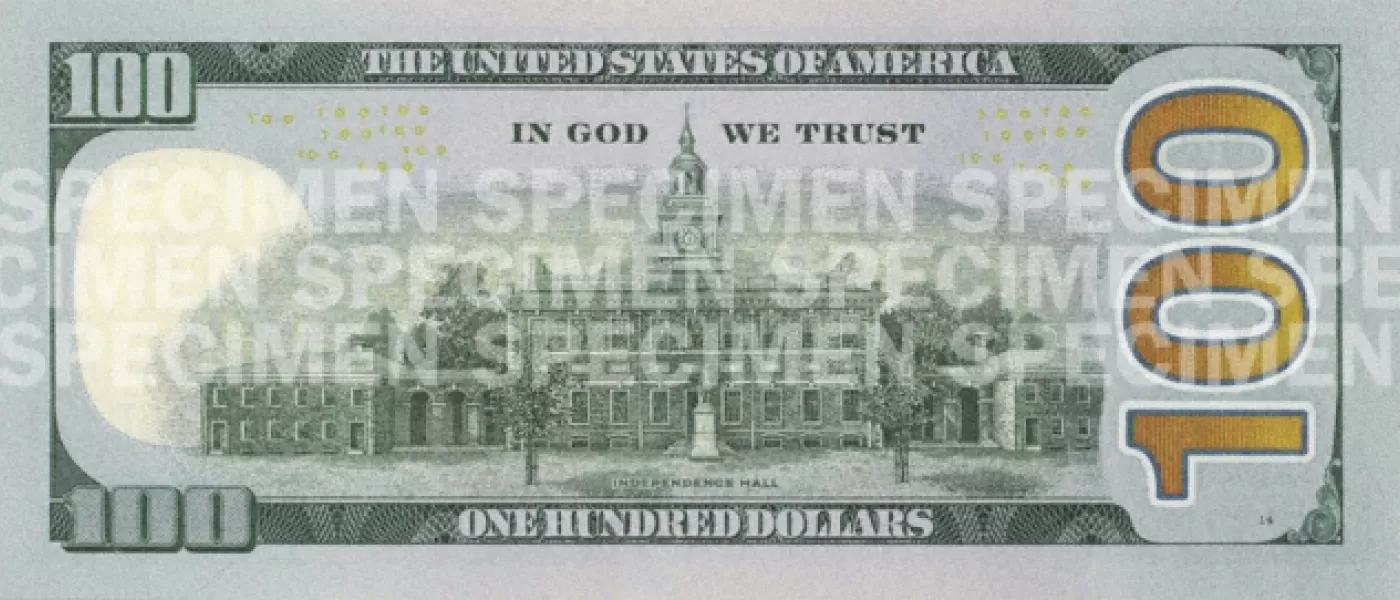
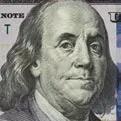
The $100 note features a portrait of Benjamin Franklin on the front of the note and a vignette of Independence Hall on the back of the note.
-
Symbols of Freedom
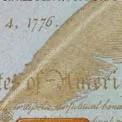
Phrases from the Declaration of Independence and the quill the Founding Fathers used to sign the historic document are found to the right of the portrait.
-
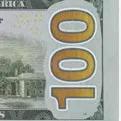
Gold 100
A large gold numeral 100 on the back of the note helps those with visual impairments distinguish the denomination.
-
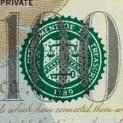
Treasury Seal
A green seal to the right of the portrait represents the U.S. Department of the Treasury.
-
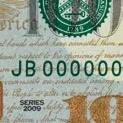
Serial Numbers
A unique combination of eleven numbers and letters appears twice on the front of the note.
-
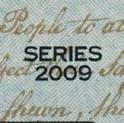
Series Year
The design includes series years 2009 and 2009A.


Security Thread
Hold the note to light to see an embedded thread running vertically to the left of the portrait. The thread is imprinted with the letters USA and the numeral 100 in an alternating pattern and is visible from both sides of the note. The thread glows pink when illuminated by ultraviolet light.
3-D Security Ribbon
Tilt the note back and forth while focusing on the blue ribbon. You will see the bells change to 100s as they move. When you tilt the note back and forth, the bells and 100s move side to side. If you tilt it side to side, they move up and down. The ribbon is woven into the paper, not printed on it.
Bell in the Inkwell
Tilt the note to see the color-shifting bell in the copper inkwell change from copper to green, an effect which makes the bell seem to appear and disappear within the inkwell.
Watermark
Hold the note to light and look for a faint image of Benjamin Franklin in the blank space to the right of the portrait. The image is visible from both sides of the note.
Color-Shifting Ink
Tilt the note to see the numeral 100 in the lower right corner of the front of the note shift from copper to green.

Security Thread
Hold the note to light to see an embedded thread running vertically to the left of the portrait. The thread is imprinted with the letters USA and the numeral 100 in an alternating pattern and is visible from both sides of the note. The thread glows pink when illuminated by ultraviolet light.

Watermark
Hold the note to light and look for a faint image of Benjamin Franklin in the blank space to the right of the portrait. The image is visible from both sides of the note.

Color-Shifting Ink
Tilt the note to see the numeral 100 in the lower right corner of the front of the note shift from green to black.
-
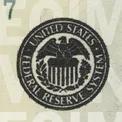
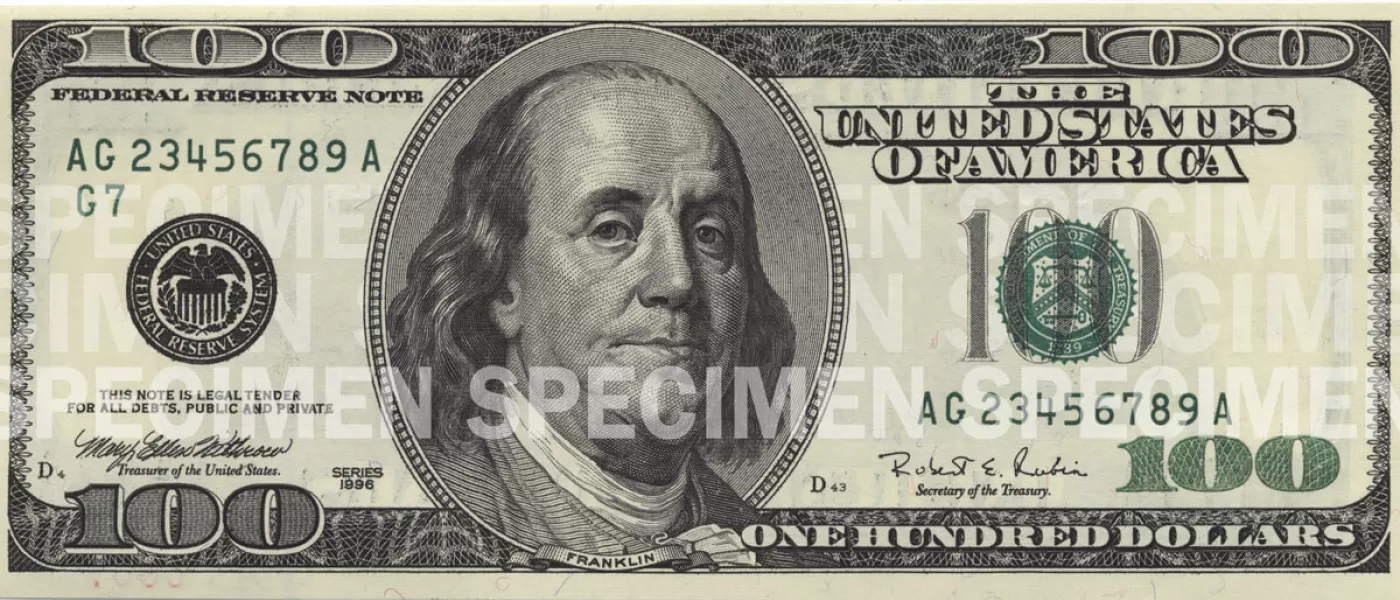
Federal Reserve System Seal
A black seal to the left of the portrait represents the entire Federal Reserve System. A letter and number beneath the left serial number identifies the distributing Federal Reserve Bank.
-

Microprinting
Look carefully (magnification may be necessary) to see the small printed text USA 100 within the numeral in the lower left corner and THE UNITED STATES OF AMERICA in the line in the left lapel of Franklin’s coat.
-
Raised Printing
Move your finger along the note’s surface to feel the raised printing, which gives genuine Federal Reserve notes their distinctive texture.
-
Paper
Federal Reserve note paper is one-fourth linen and three-fourths cotton, and contains red and blue security fibers.
-

Portrait and Vignette
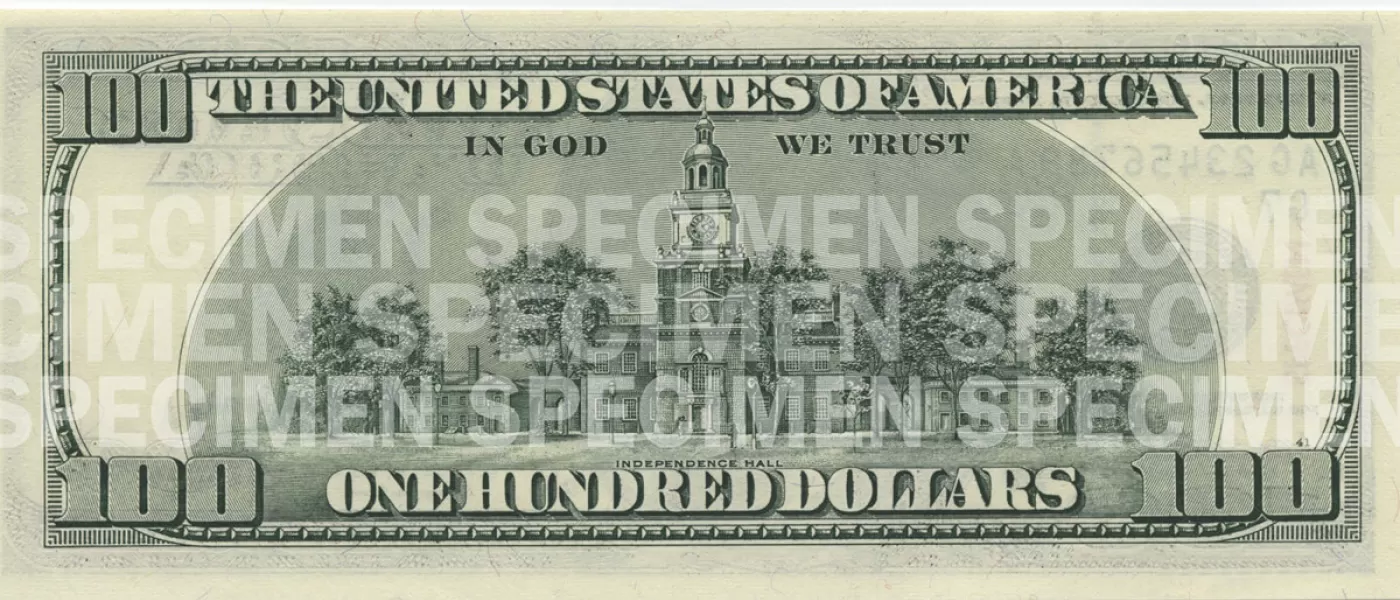
The $100 note features a portrait of Benjamin Franklin on the front of the note and a vignette of Independence Hall on the back of the note.
-
Treasury Seal
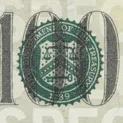
A green seal to the right of the portrait represents the U.S. Department of the Treasury.
-
Serial Numbers
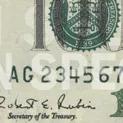
A unique combination of eleven numbers and letters appears twice on the front of the note.
-
Series Year
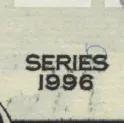
The design includes series years 1996, 1999, 2001, 2003, 2003A, 2006, and 2006A.


Security Thread
Hold the note to light to see an embedded thread running vertically to the left of the portrait. The thread is imprinted with the letters USA and the numeral 100 in an alternating pattern and is visible from both sides of the note. The thread glows pink when illuminated by ultraviolet light.
Watermark
Hold the note to light and look for a faint image of Benjamin Franklin in the blank space to the right of the portrait. The image is visible from both sides of the note.
Color-Shifting Ink
Tilt the note to see the numeral 100 in the lower right corner of the front of the note shift from green to black.

Security Thread
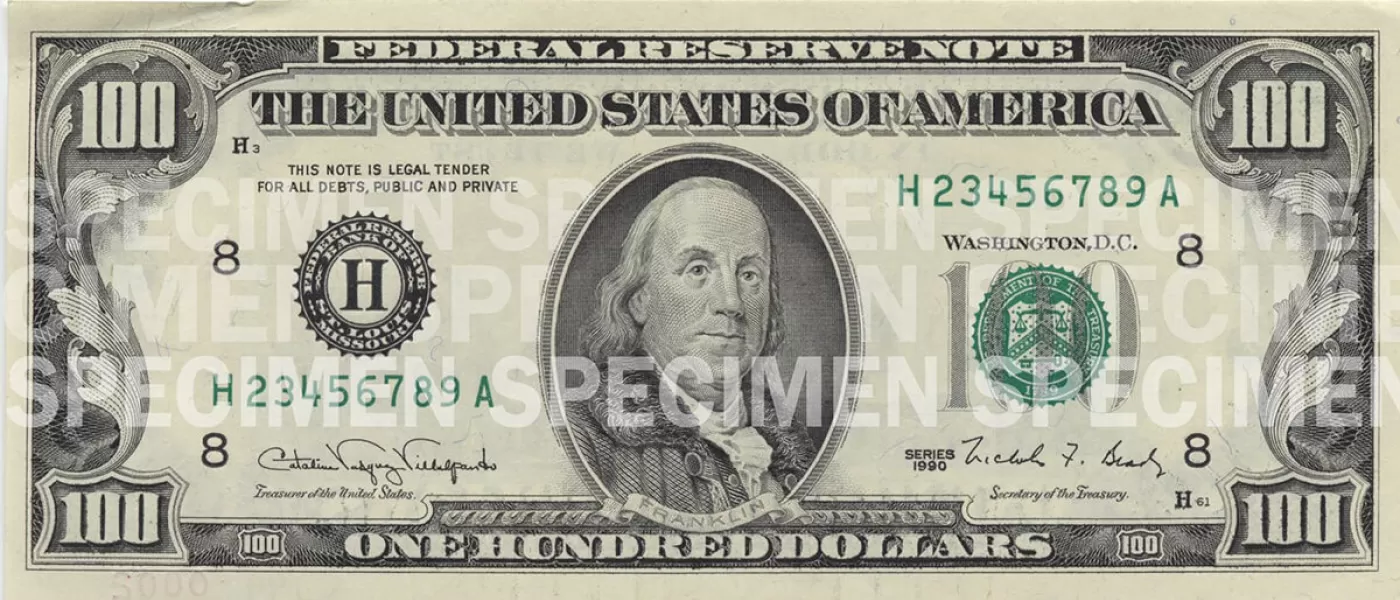
Hold the note to light to see an embedded thread running vertically to the left of the portrait. The thread is imprinted with the letters USA and the numeral 100 in an alternating pattern and is visible from both sides of the note. The thread glows pink when illuminated by ultraviolet light.

Microprinting
Look carefully (magnification may be necessary) to see the small printed words THE UNITED STATES OF AMERICA along the outer edge of the portrait’s oval frame.
-

Federal Reserve Bank Seal
A black seal to the left of the portrait bears the name and corresponding letter of the distributing Federal Reserve Bank.
-

Treasury Seal
A green seal to the right of the portrait represents the U.S. Department of the Treasury.
-

Raised Printing
Move your finger along the note’s surface to feel the raised printing, which gives genuine Federal Reserve notes their distinctive texture.
-

Paper
Federal Reserve note paper is one-fourth linen and three-fourths cotton, and contains red and blue security fibers.
-

Portrait and Vignette
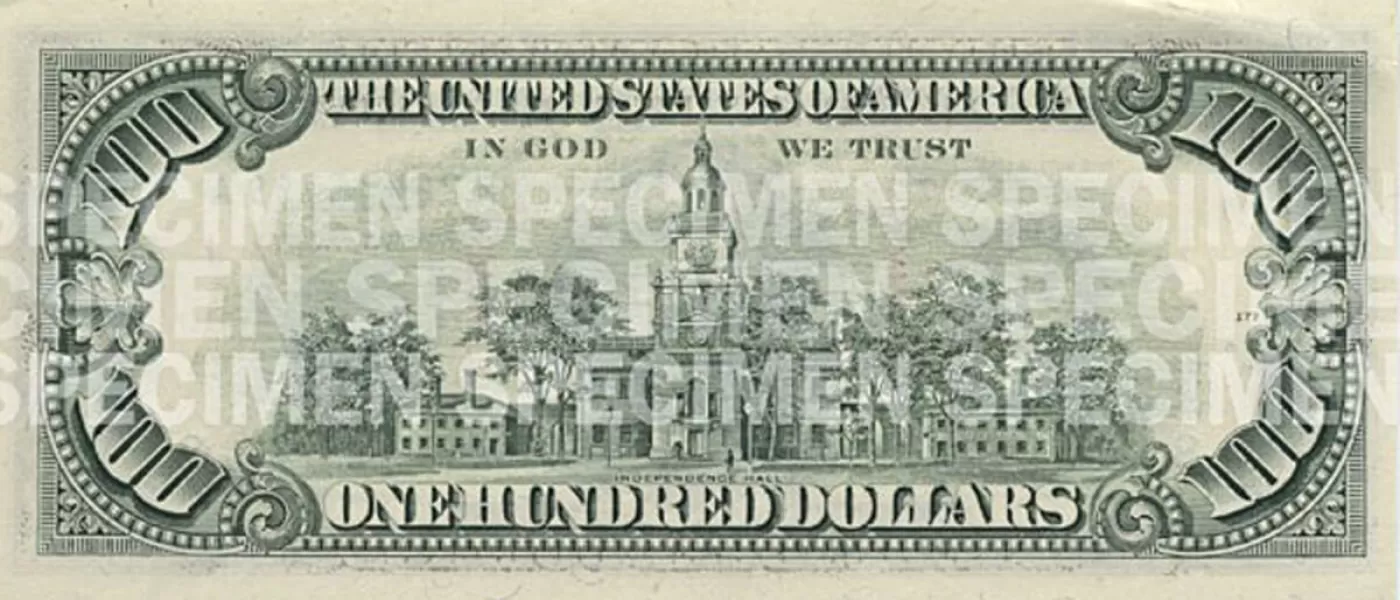
The $100 note features a portrait of Benjamin Franklin on the front of the note and a vignette of Independence Hall on the back of the note.
-

Serial Numbers
A unique combination of eleven numbers and letters appears twice on the front of the note.
-

Series Year
The design includes series years 1990 and 1993.


Security Thread
Hold the note to light to see an embedded thread running vertically to the left of the portrait. The thread is imprinted with the letters USA and the numeral 100 in an alternating pattern and is visible from both sides of the note. The thread glows pink when illuminated by ultraviolet light.
Microprinting
Look carefully (magnification may be necessary) to see the small printed words THE UNITED STATES OF AMERICA along the outer edge of the portrait’s oval frame.

Federal Reserve Bank Seal
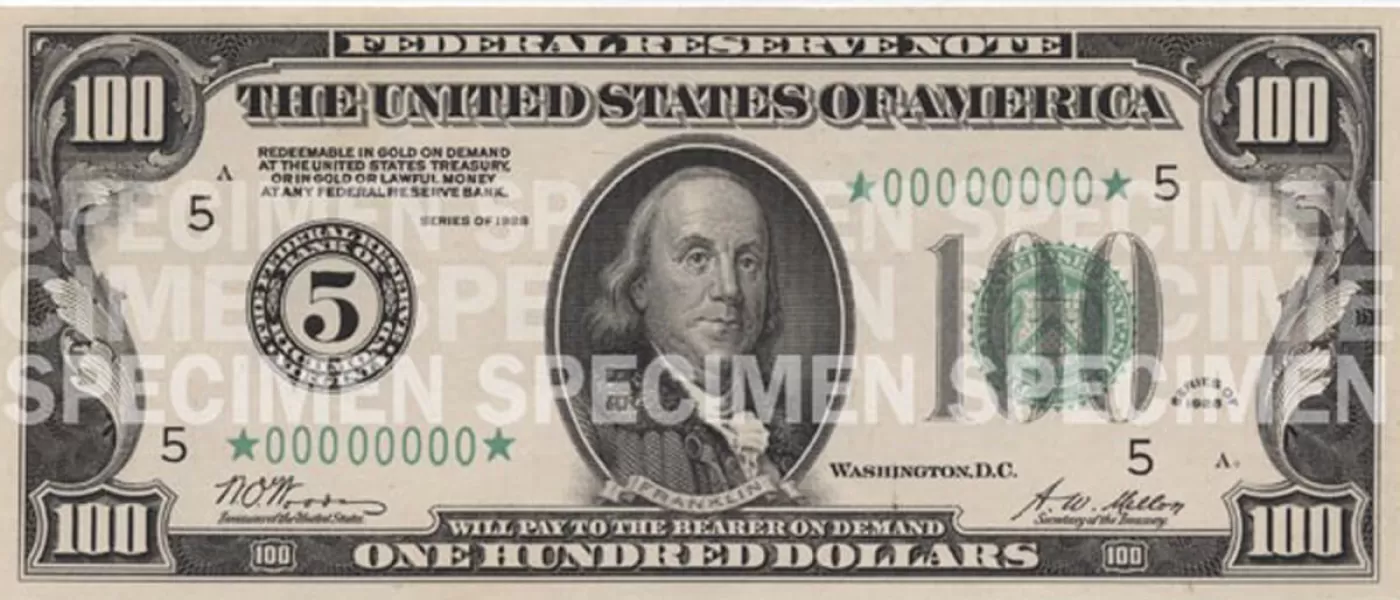
A black seal to the left of the portrait bears the name of the distributing Federal Reserve Bank.

Raised Printing
Move your finger along the note’s surface to feel the raised printing, which gives genuine Federal Reserve notes their distinctive texture.

Paper
Federal Reserve note paper is one-fourth linen and three-fourths cotton, and contains red and blue security fibers.

Portrait and Vignette
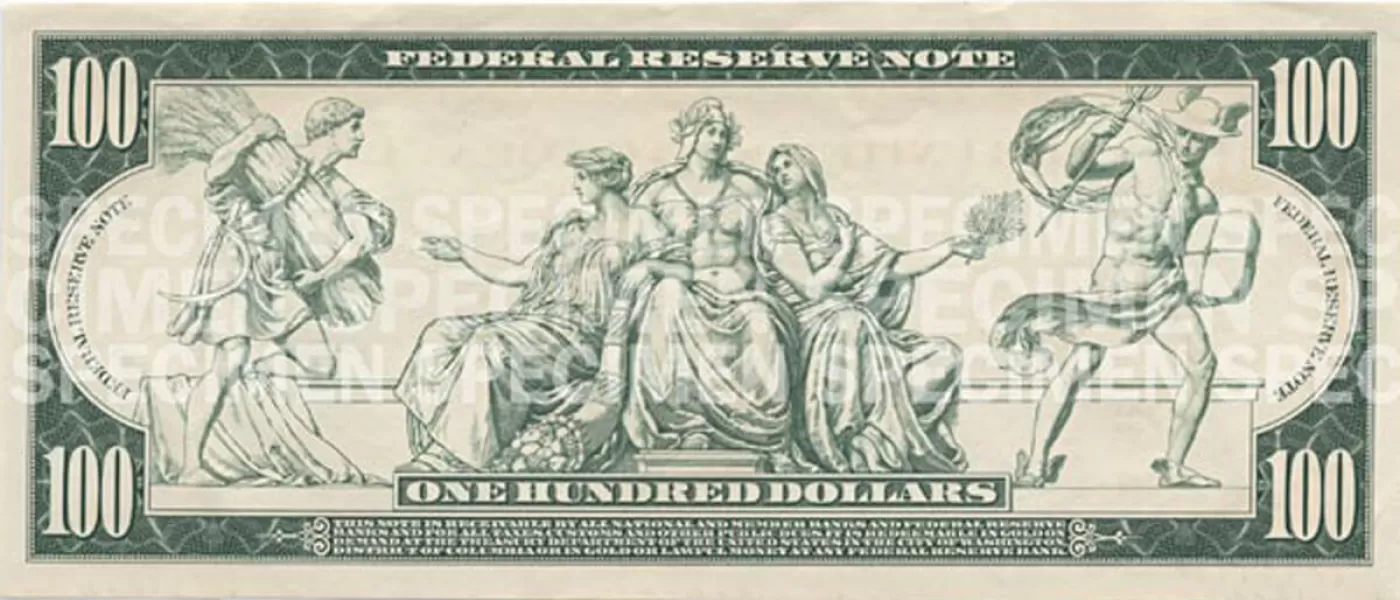
The $100 note features a portrait of Benjamin Franklin on the front of the note. The vignette on the back of the note changed in 1929 to feature Independence Hall.

Treasury Seal
A seal to the right of the portrait represents the U.S. Department of the Treasury. The design of the seal was changed to incorporate an English inscription and appears on all Federal Reserve notes of the 1969 series year or later.

Serial Numbers
A combination of numbers and letters appears twice on the front of the note.
Federal Reserve Bank Seal
A black seal to the left of the portrait bears the name of the distributing Federal Reserve Bank.
Raised Printing
Move your finger along the note’s surface to feel the raised printing, which gives genuine Federal Reserve notes their distinctive texture.
Paper
Federal Reserve note paper is one-fourth linen and three-fourths cotton, and contains red and blue security fibers.
Portrait and Vignette
The $100 note features a portrait of Benjamin Franklin on the front of the note. The vignette on the back of the note changed in 1929 to feature Independence Hall.
Treasury Seal
A seal to the right of the portrait represents the U.S. Department of the Treasury. The design of the seal was changed to incorporate an English inscription and appears on all Federal Reserve notes of the 1969 series year or later.
Serial Numbers
A combination of numbers and letters appears twice on the front of the note.
Featured
Decoding Dollars: The $100 brochure
$100 Note Life Cycle
Before a Federal Reserve note enters circulation, it must pass through four critical steps: design, order, production, and issuance.
-
1.67Billion Notes2018 FY Print Order
-
$1.25Trillion2017 Value in Circulation
-
15YearsEstimated Lifespan