
$20 Note
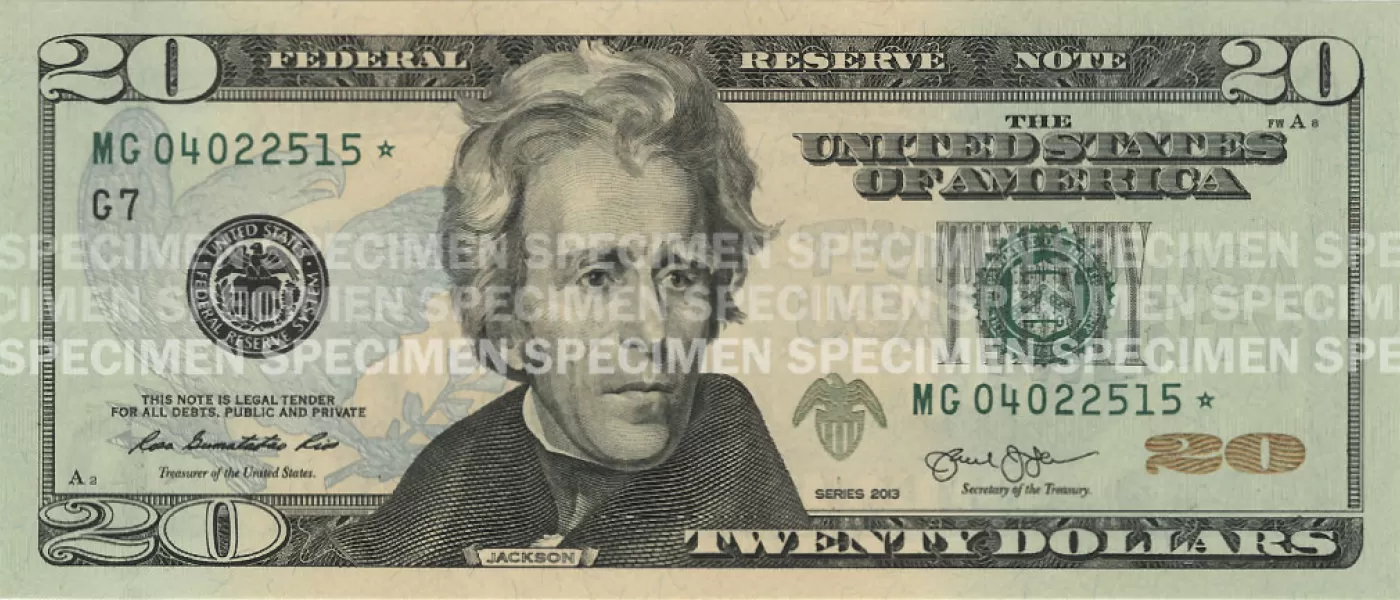

Security Thread
Hold the note to light to see an embedded thread running vertically to the left of the portrait. The thread is imprinted with the text USA TWENTY and a small flag in an alternating pattern and is visible from both sides of the note. The thread glows green when illuminated by ultraviolet light.

Watermark
Hold the note to light and look for a faint image of President Jackson in the blank space to the right of the portrait. The image is visible from both sides of the note.

Color-Shifting Ink
Tilt the note to see the numeral 20 in the lower right corner of the front of the note shift from copper to green.
-
Federal Reserve System Seal
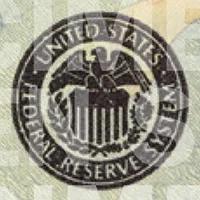
A black seal to the left of the portrait represents the entire Federal Reserve System. A letter and number beneath the left serial number identifies the distributing Federal Reserve Bank.
-
Microprinting
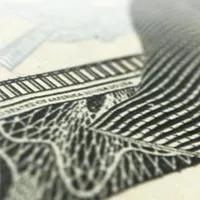
Look carefully (magnification may be necessary) to see the small printed text USA20 along the border of the first three letters of the blue TWENTY USA ribbon to the right of the portrait and THE UNITED STATES OF AMERICA 20 USA 20 in black in the border below the Treasurer’s signature.
-
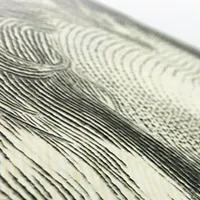
Raised Printing
Move your finger along the note’s surface to feel the raised printing, which gives genuine Federal Reserve notes their distinctive texture.
-
Paper
Federal Reserve note paper is one-fourth linen and three-fourths cotton, and contains red and blue security fibers.
-
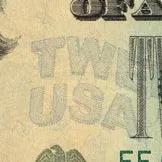
Color
The note includes background colors of green and peach. The words TWENTY USA have been printed in blue in the background to the right of the portrait.
-
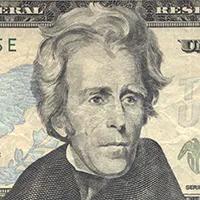
Portrait and Vignette
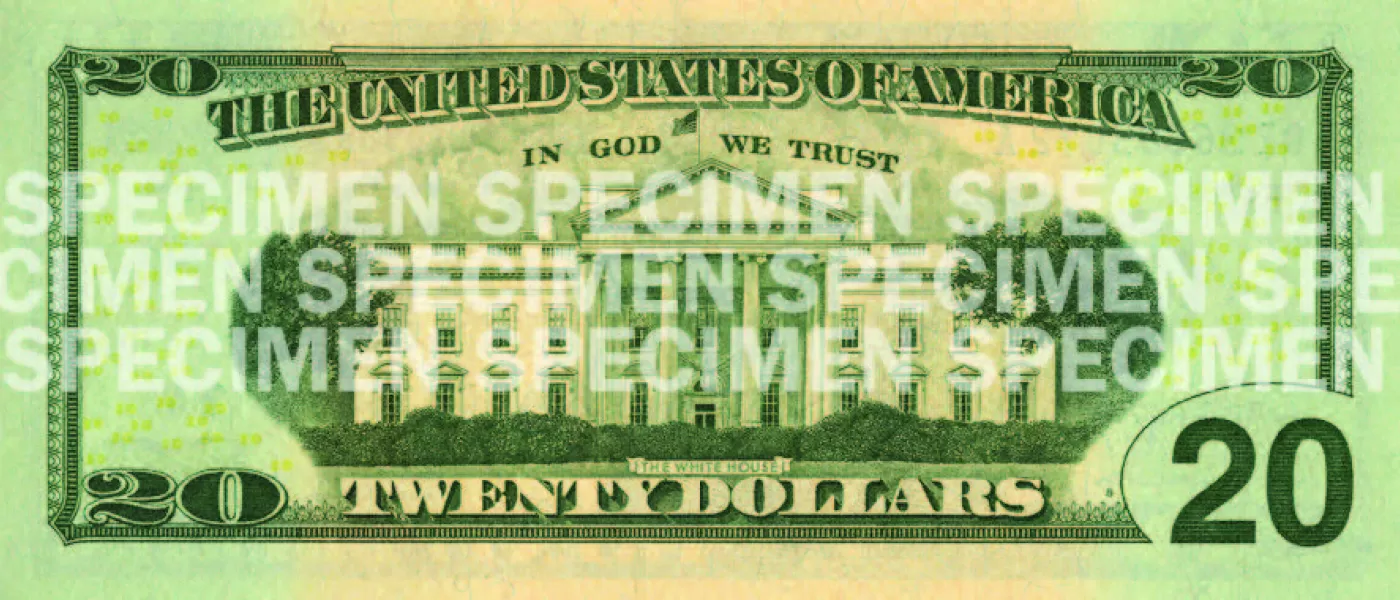
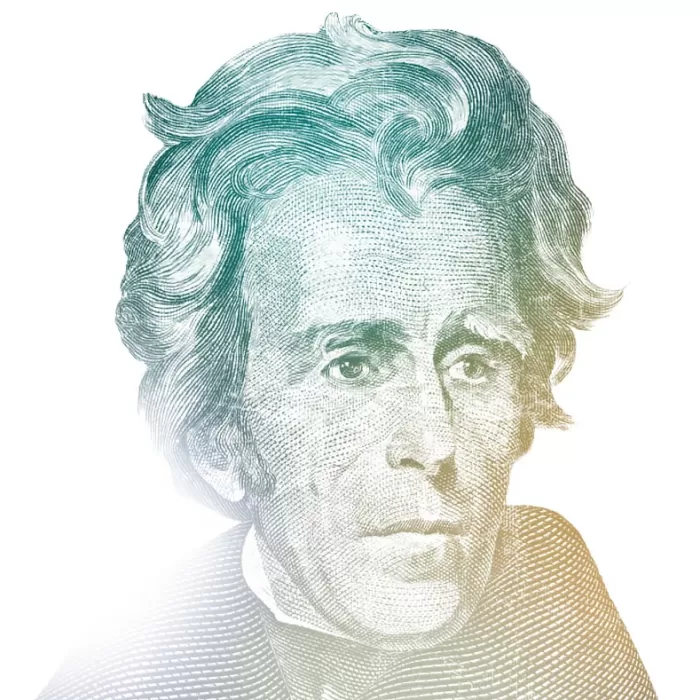
The $20 note features a portrait of President Jackson on the front of the note and a vignette of the White House on the back of the note.
-
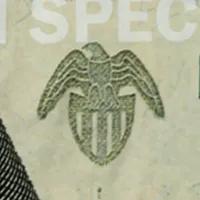
Symbols of Freedom
The large blue eagle in the background to the left of President Jackson’s portrait is representative of those drawn and sculpted during his time period. The smaller metallic green eagle to the lower right of the portrait is a more contemporary engraving.
-
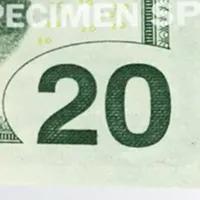
Green 20
A large green numeral 20 in the lower right corner on the back of the note helps those with visual impairments distinguish the denomination.
-
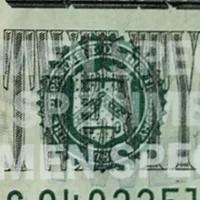
Treasury Seal
A green seal to the right of the portrait represents the U.S. Department of the Treasury.
-
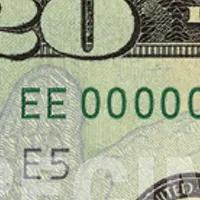
Serial Numbers
A unique combination of eleven numbers and letters appears twice on the front of the note.
-
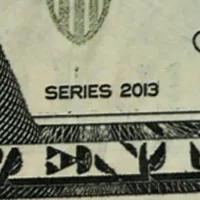
Series Year
The design includes series years 2004, 2004A, 2006, 2009, and 2013.


Security Thread
Hold the note to light to see an embedded thread running vertically to the left of the portrait. The thread is imprinted with the text USA TWENTY and a small flag in an alternating pattern and is visible from both sides of the note. The thread glows green when illuminated by ultraviolet light.
Watermark
Hold the note to light and look for a faint image of President Jackson in the blank space to the right of the portrait. The image is visible from both sides of the note.
Color-Shifting Ink
Tilt the note to see the numeral 20 in the lower right corner of the front of the note shift from copper to green.

Security Thread
Hold the note to light to see an embedded thread running vertically to the left of the portrait. The thread is imprinted with the text USA TWENTY and a small flag in an alternating pattern and is visible from both sides of the note. The thread glows green when illuminated by ultraviolet light.

Watermark
Hold the note to light and look for a faint image of President Jackson in the blank space to the right of the portrait. The image is visible from both sides of the note.

Color-Shifting Ink
Tilt the note to see the numeral 20 in the lower right corner of the front of the note shift from green to black.
-

Federal Reserve System Seal
A black seal to the left of the portrait represents the entire Federal Reserve System. A letter and number beneath the left serial number identifies the distributing Federal Reserve Bank.
-

Microprinting
Look carefully (magnification may be necessary) to see the small printed text USA20 repeated within the numeral in the lower left corner on the front of the note and THE UNITED STATES OF AMERICA along the lower edge ornamentation framing the portrait.
-

Raised Printing
Move your finger along the note’s surface to feel the raised printing, which gives genuine Federal Reserve notes their distinctive texture.
-

Paper
Federal Reserve note paper is one-fourth linen and three-fourths cotton, and contains red and blue security fibers.
-

Portrait and Vignette
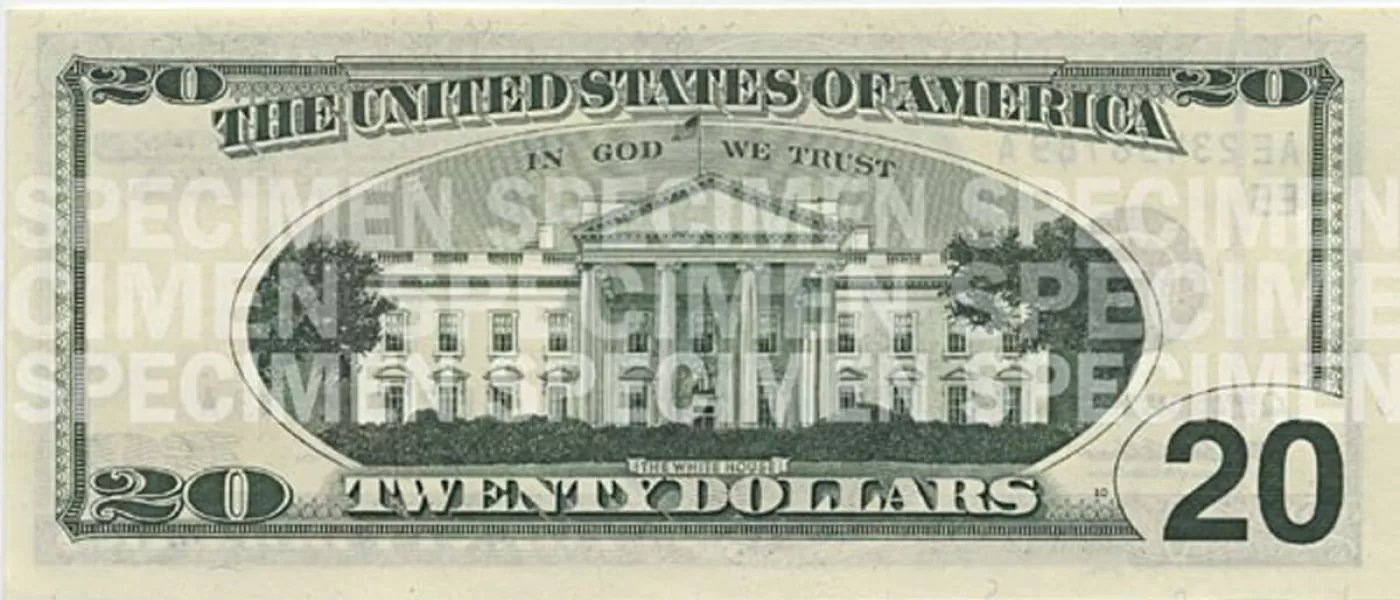
The $20 note features a portrait of President Jackson on the front of the note and a vignette of the White House on the back of the note.
-

Green 20
A large green numeral 20 in the lower right corner on the back of the note helps those with visual impairments distinguish the denomination.
-

Treasury Seal
A green seal to the right of the portrait represents the U.S. Department of the Treasury.
-

Serial Numbers
A unique combination of eleven numbers and letters appears twice on the front of the note.
-

Series Year
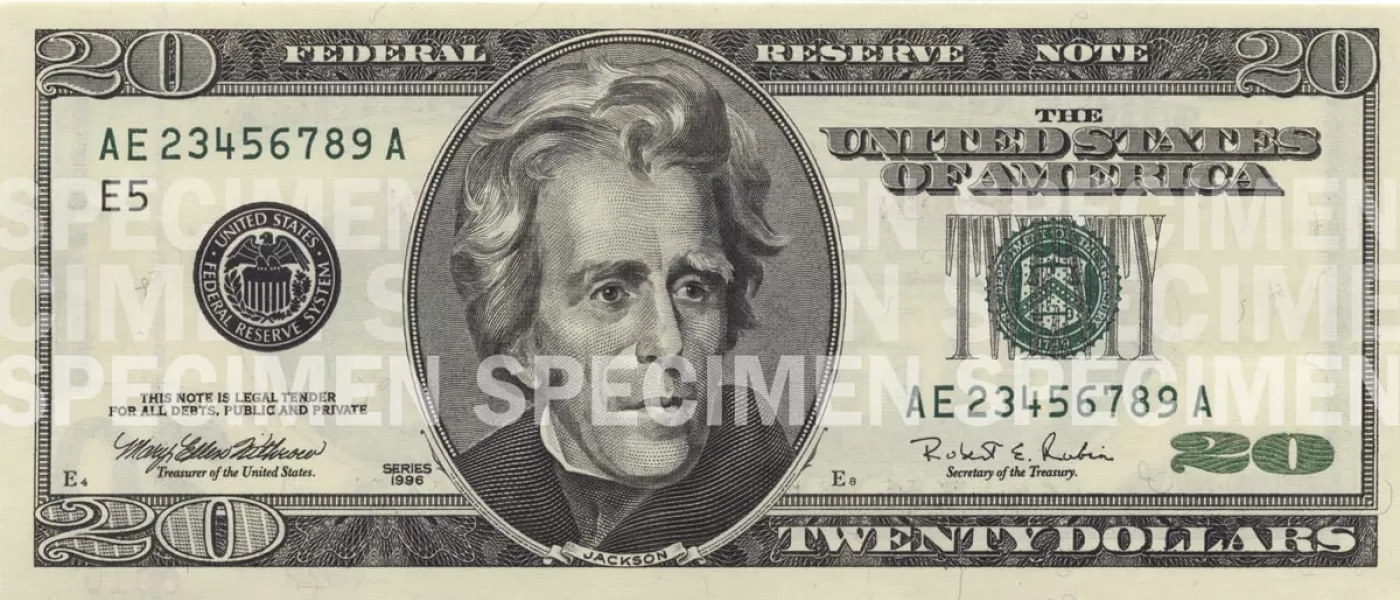
The design includes series years 1996, 1999, and 2001.


Security Thread
Hold the note to light to see an embedded thread running vertically to the left of the portrait. The thread is imprinted with the text USA TWENTY and a small flag in an alternating pattern and is visible from both sides of the note. The thread glows green when illuminated by ultraviolet light.
Watermark
Hold the note to light and look for a faint image of President Jackson in the blank space to the right of the portrait. The image is visible from both sides of the note.
Color-Shifting Ink
Tilt the note to see the numeral 20 in the lower right corner of the front of the note shift from green to black.

Security Thread
Hold the note to light to see an embedded thread running vertically to the left of the Federal Reserve Bank seal. The thread is imprinted with the letters USA and the word TWENTY in an alternating pattern and is visible from both sides of the note. The thread glows green when illuminated by ultraviolet light.

Microprinting
Look carefully (magnification may be necessary) to see the small printed words THE UNITED STATES OF AMERICA along the outer edge of the portrait's oval frame.
-

Federal Reserve Bank Seal
A black seal to the left of the portrait which bears the name and corresponding letter of the distributing Federal Reserve Bank.
-

Treasury Seal
A green seal to the right of the portrait represents the U.S. Department of the Treasury.
-

Raised Printing
Move your finger along the note's surface to feel the raised printing, which gives genuine Federal Reserve notes their distinctive texture.
-

Paper
Federal Reserve note paper is one-fourth linen and three-fourths cotton, and contains red and blue security fibers.
-

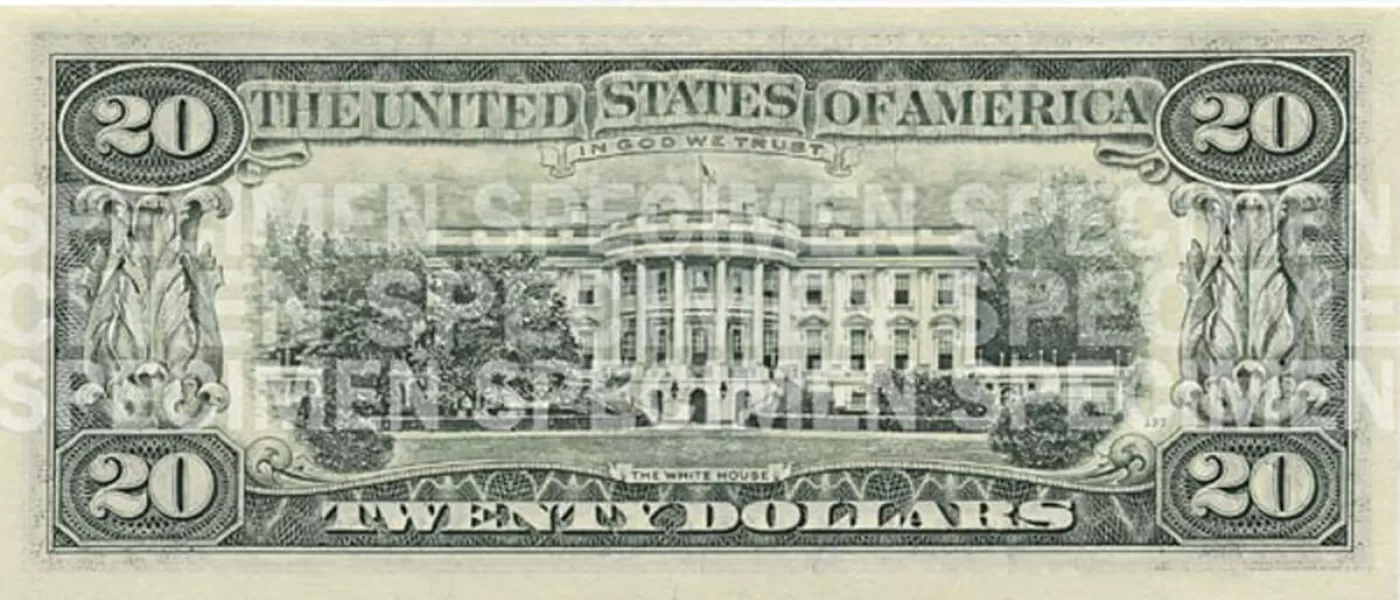
Portrait and Vignette
The $20 note features a portrait of President Jackson on the front of the note and a vignette of the White House on the back of the note.
-

Serial Numbers
A unique combination of eleven numbers and letters appears twice on the front of the note.
-

Series Year
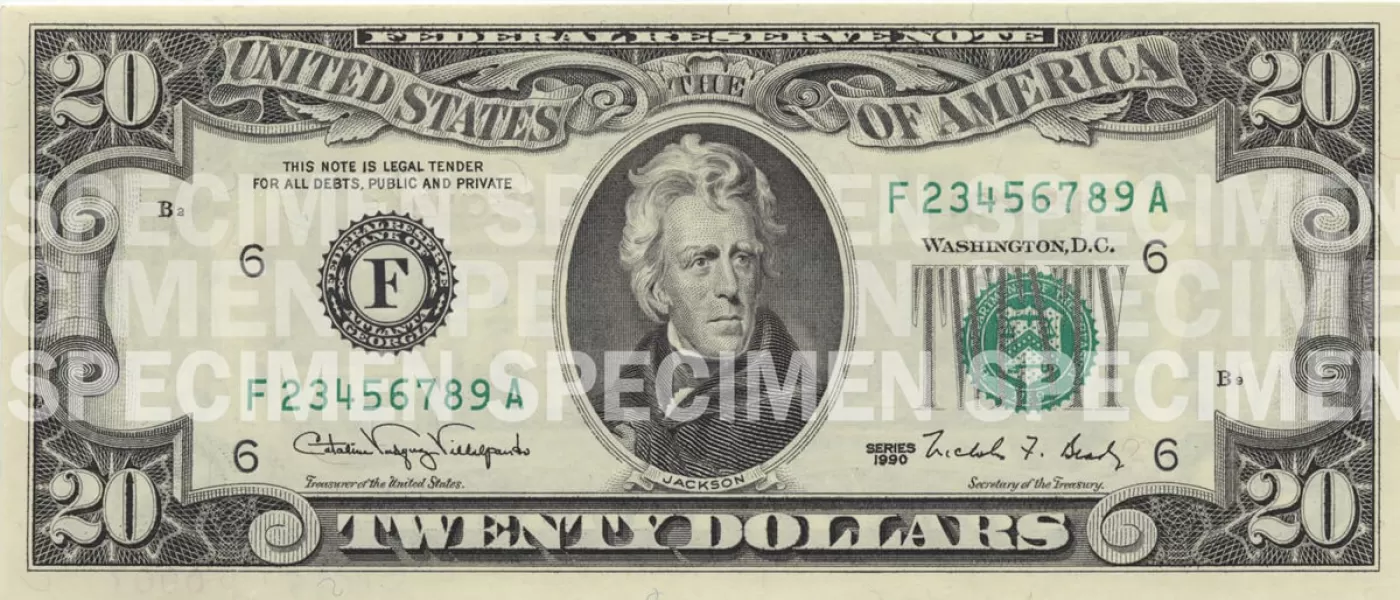
The design includes series years 1990, 1993, and 1995.


Security Thread
Hold the note to light to see an embedded thread running vertically to the left of the Federal Reserve Bank seal. The thread is imprinted with the letters USA and the word TWENTY in an alternating pattern and is visible from both sides of the note. The thread glows green when illuminated by ultraviolet light.
Microprinting
Look carefully (magnification may be necessary) to see the small printed words THE UNITED STATES OF AMERICA along the outer edge of the portrait's oval frame.

Federal Reserve Bank Seal
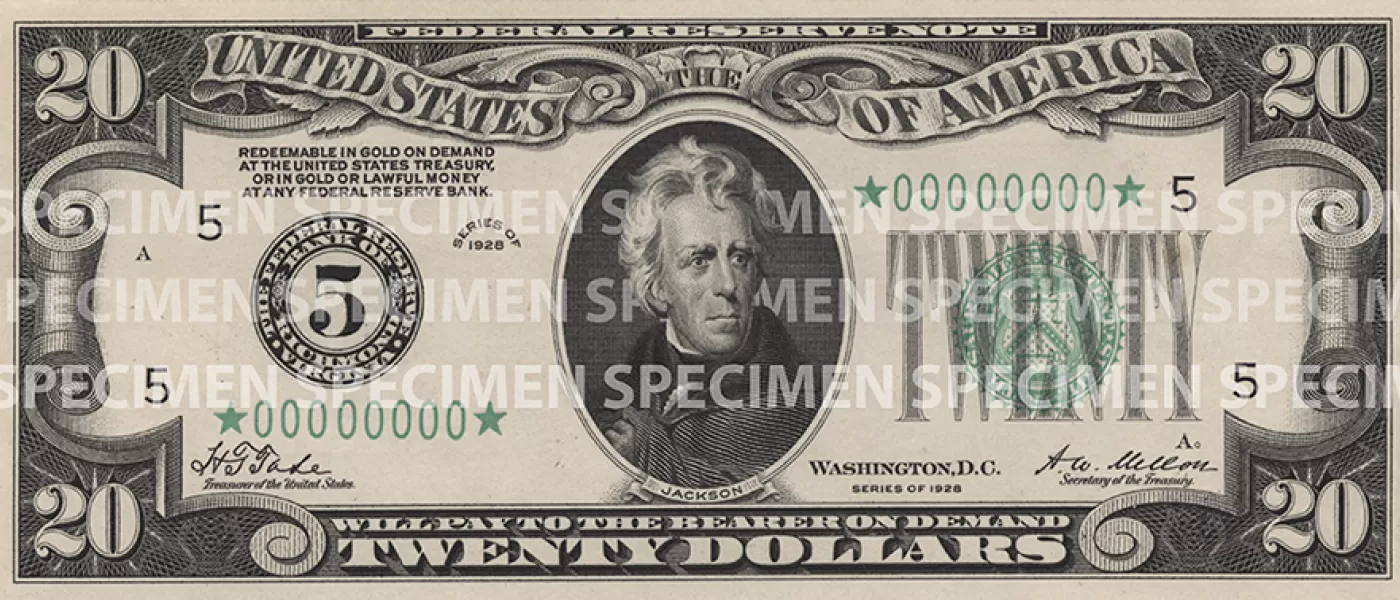
A black seal to the left of the portrait bears the name of the distributing Federal Reserve Bank.

Serial Numbers
A combination of numbers and letters appears twice on the front of the note.

Paper
Federal Reserve note paper is one-fourth linen and three-fourths cotton, and contains red and blue security fibers.

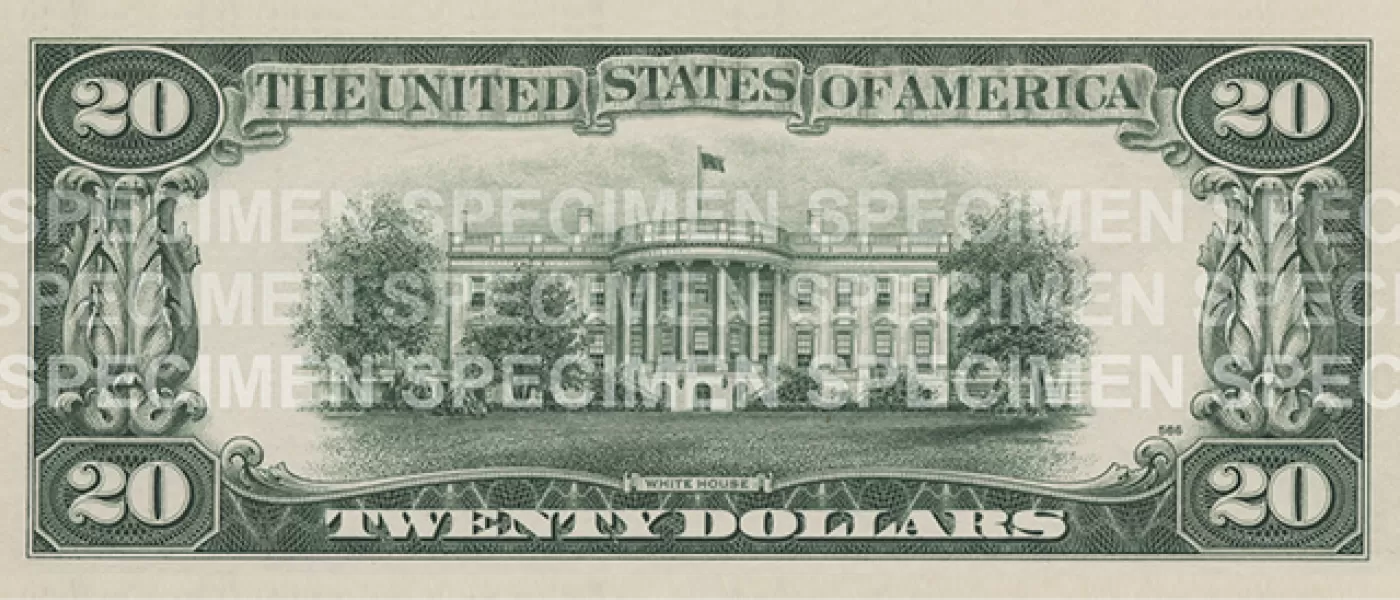
Portrait and Vignette
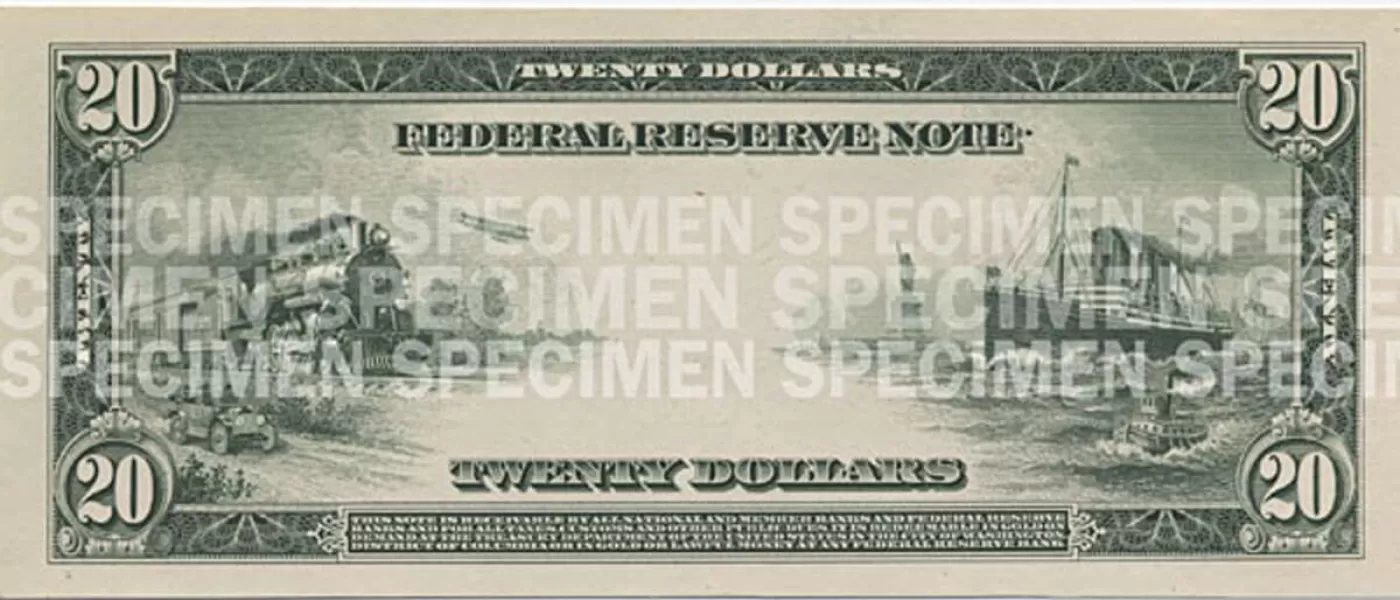
The portrait and vignette was changed in 1929 to feature President Jackson on the front of the note and the White House on the back of the note.

Raised Printing
Move your finger along the note’s surface to feel the raised printing, which gives genuine Federal Reserve notes their distinctive texture.

Treasury Seal
A seal to the right of the portrait represents the U.S. Department of the Treasury. The design of the seal was changed to incorporate an English inscription and appears on all Federal Reserve notes of the 1969 series year or later.
Federal Reserve Bank Seal
A black seal to the left of the portrait bears the name of the distributing Federal Reserve Bank.
Serial Numbers
A combination of numbers and letters appears twice on the front of the note.
Paper
Federal Reserve note paper is one-fourth linen and three-fourths cotton, and contains red and blue security fibers.
Portrait and Vignette
The portrait and vignette was changed in 1929 to feature President Jackson on the front of the note and the White House on the back of the note.
Raised Printing
Move your finger along the note’s surface to feel the raised printing, which gives genuine Federal Reserve notes their distinctive texture.
Treasury Seal
A seal to the right of the portrait represents the U.S. Department of the Treasury. The design of the seal was changed to incorporate an English inscription and appears on all Federal Reserve notes of the 1969 series year or later.
Federal Reserve Bank Seal
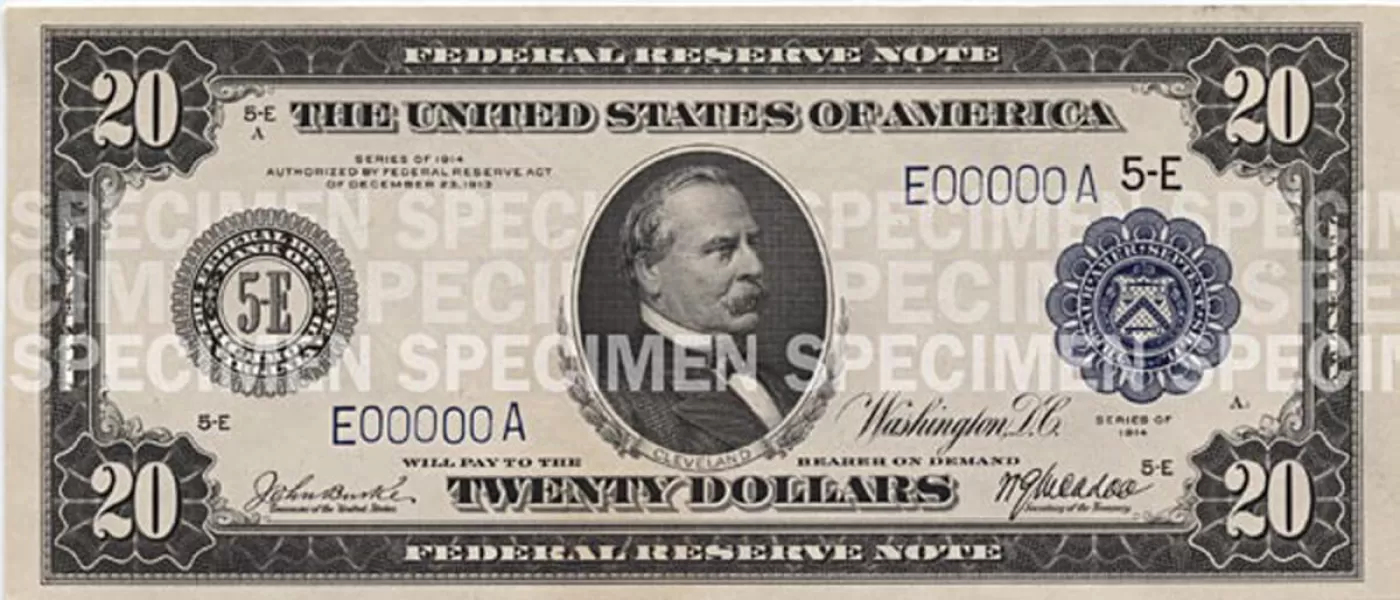
A black seal to the left of the portrait bears the name of the distributing Federal Reserve Bank.
Serial Numbers
A combination of numbers and letters appears twice on the front of the note.
Paper
Federal Reserve note paper is one-fourth linen and three-fourths cotton, and contains red and blue security fibers.
Portrait and Vignette
The portrait and vignette was changed in 1929 to feature President Jackson on the front of the note and the White House on the back of the note.
Raised Printing
Move your finger along the note’s surface to feel the raised printing, which gives genuine Federal Reserve notes their distinctive texture.
Treasury Seal
A seal to the right of the portrait represents the U.S. Department of the Treasury. The design of the seal was changed to incorporate an English inscription and appears on all Federal Reserve notes of the 1969 series year or later.
Federal Reserve Bank Seal
A black seal to the left of the portrait bears the name of the distributing Federal Reserve Bank.
Serial Numbers
A combination of numbers and letters appears twice on the front of the note.
Paper
Federal Reserve note paper is one-fourth linen and three-fourths cotton, and contains red and blue security fibers.
Portrait and Vignette
The portrait and vignette was changed in 1929 to feature President Jackson on the front of the note and the White House on the back of the note.
Raised Printing
Move your finger along the note’s surface to feel the raised printing, which gives genuine Federal Reserve notes their distinctive texture.
Treasury Seal
A seal to the right of the portrait represents the U.S. Department of the Treasury. The design of the seal was changed to incorporate an English inscription and appears on all Federal Reserve notes of the 1969 series year or later.

The $20 note features subtle background colors of green and peach. The $20 note includes an embedded security thread that glows green when illuminated by UV light. When held to light, a portrait watermark of President Jackson is visible from both sides of the note.The note includes a color-shifting numeral 20 in the lower right corner of the note.
Click play to view features
Color-Shifting Ink
Tilt the note to see the numeral 20 in the lower right corner on the front of the note shift from copper to green.
Portrait Watermark
Hold the note to light and look for a faint image of President Jackson in the blank space to the right of the portrait. The image is visible from both sides of the note.
Security Thread
Hold the note to light to see an embedded thread running vertically to the left of the portrait. The thread is imprinted with the text USA TWENTY and a small flag in an alternating pattern and is visible from both sides of the note. The thread glows green when illuminated by ultraviolet light.
Raised Printing
Move your finger along the note’s surface to feel the raised printing, which gives genuine Federal Reserve notes their distinctive texture.
Microprinting
Look carefully (magnification may be necessary) to see the small text USA20 along the border of the first three letters of the blue TWENTY USA ribbon to the right of the portrait and THE UNITED STATES OF AMERICA 20 USA 20 in black in the border below the Treasurer’s signature.
Featured
Decoding Dollars: The $20 brochure
$20 Note Life Cycle
Before a Federal Reserve note enters circulation, it must pass through four critical steps: design, order, production, and issuance.
-
1.8Billion Notes2018 FY Print Order
-
$183.8Billion2017 Value in Circulation
-
7.9YearsEstimated Lifespan